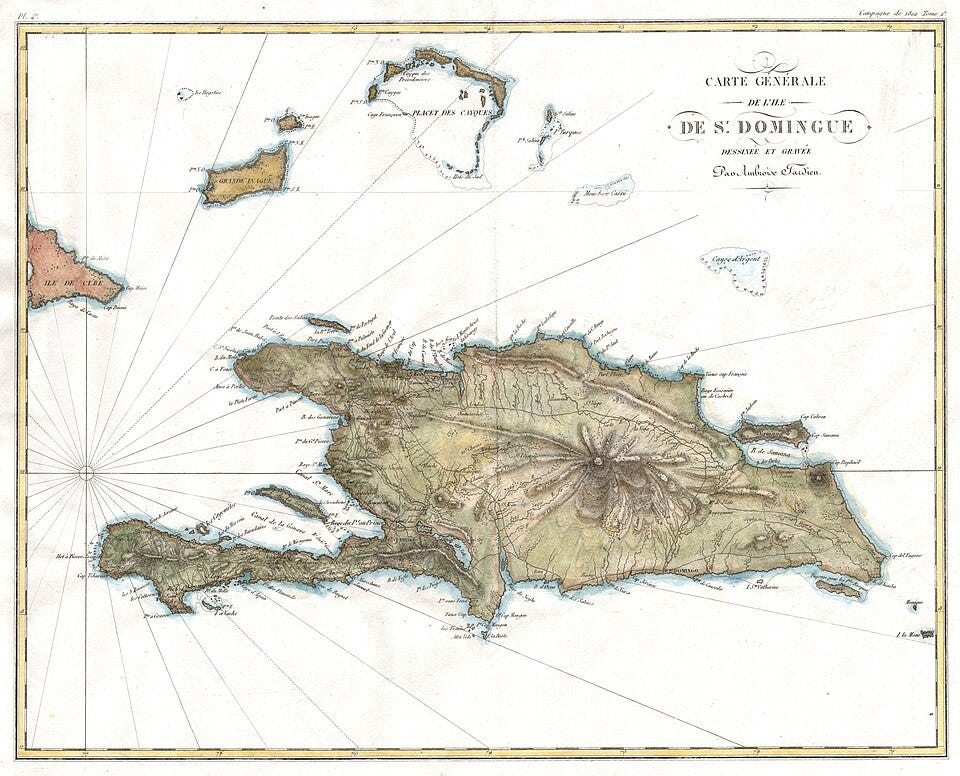
Between the years of 1791 and 1804, two mosquito-borne diseases destroyed the French expeditionary armies in Saint-Domingue (modern day Haiti and the Dominican Republic) and ended up tipping the balance of power toward revolution. It also had an indirect impact of doubling the size of a newly formed country called the United States of America. Yellow fever (aka Yellow Jack) and malaria imposed such severe biological constraints on European military power, which shifted the balance of power toward those with acquired immunity and completely obliterated the conditions necessary for Napoleon’s planned empire in North America’s Mississippi River Valley.
The Edge of Epidemiology is a reader-supported publication. To receive new posts and support my work, consider becoming a free or paid subscriber.
Asymmetric Mortality
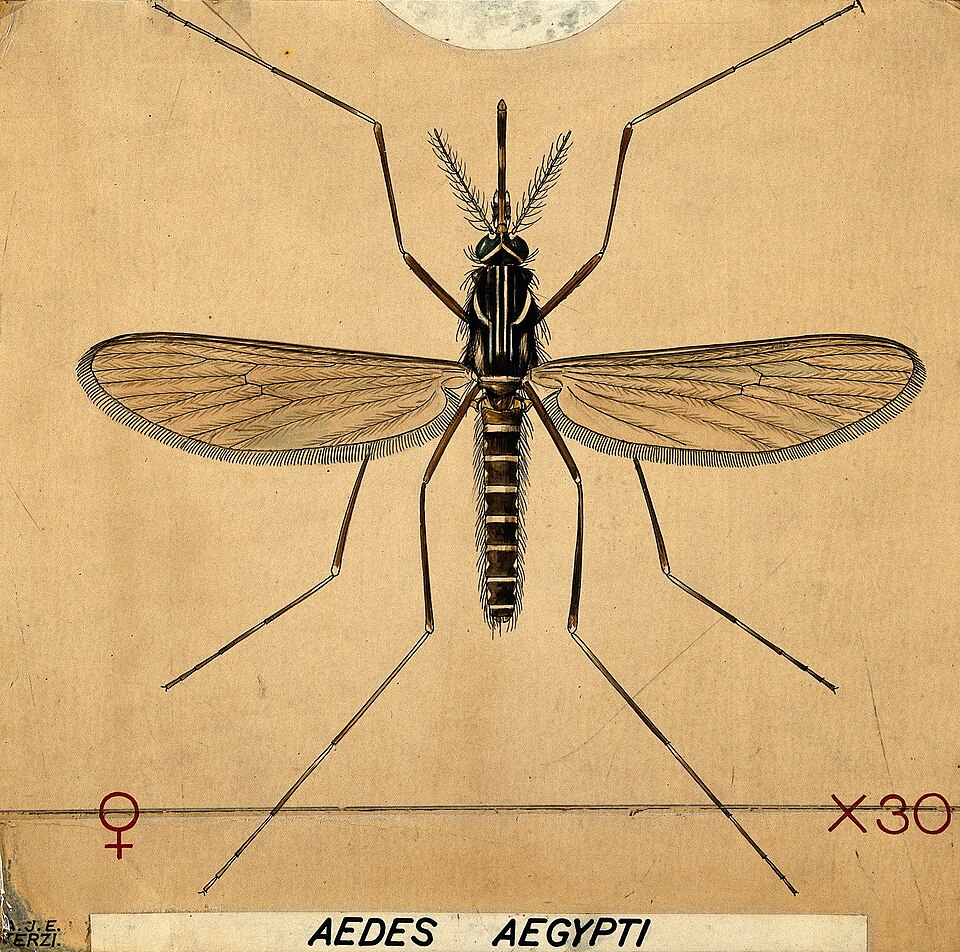
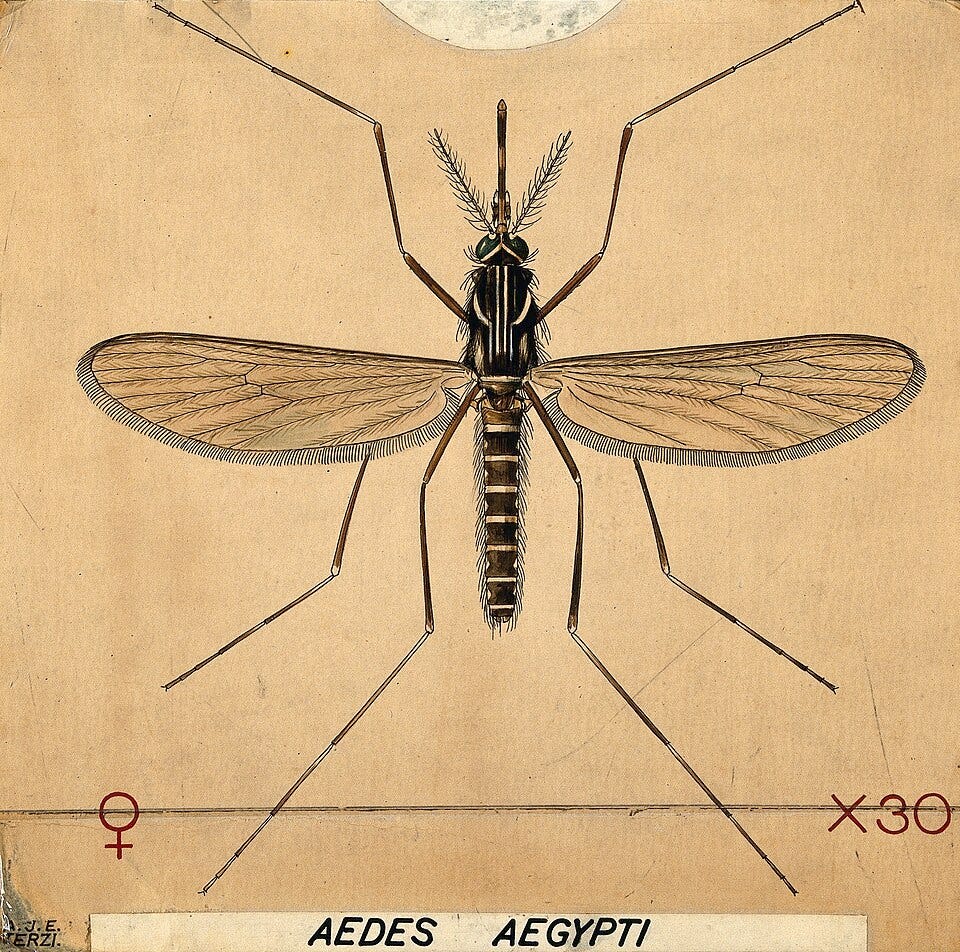
Aedes aegypti is the main vector for yellow fever. This species of mosquito evolved as human-biting and container-breeding mosquito in West Africa and was let loose across the Atlantic in water barrels and other containers during the slave trade. The species found an optimal climate with humid areas that would keep stagnant pools of water available as breeding grounds. The alternating wet and dry seasons helped to sustain the transmission of both yellow jack and malaria, with some arguing that deforestation and irrigation for sugar and coffee plantations increased the breeding sites for both the Aedes and Anopheles species of mosquitos (which is hard to argue against in my opinion). West African and Creole groups who had been exposed since childhood had much better immunological responses to these diseases.
By the late 1700s and early 1800s Napoleon was bothered by how much colonial trade had declined, for which many blamed the abolishment of slavery in 1794. The force was only able to be put together and sent out due to the peace treaty signed between the French and the British which ended the hostilities keeping him from dispatching forces to the Caribbean. They were tasked with taking down the rebellion and gaining control of the massive Louisiana region. Napoleon wanted the return of economic power. To accomplish that goal he sent somewhere around 40,000 extra troops and sailors to Saint-Domingue under the charge of General Charles Leclerc in late 1801. They were charged with suppressing the ongoing rebellion. That ended up being a “war of extermination” in the words of Leclerc, who upon the realization that they could not suppress the rebellion set out to kill the entire adult Black population on the island. He would die of yellow fever in November of 1802.
That ill-fated 1802-1803 expedition remains one of the deadliest yellow fever epidemics ever recorded to have hit a military force. More reinforcements would arrive over the years with the total estimated deployments being somewhere from 60-80,000. The number killed (largely by yellow fever) was 50-55,000. Before he died, Leclerc noted that yellow-fever was killing 100-120 men per day. The newly arrived soldiers were the most vulnerable to the Caribbean seasonal vector ecology which had an uptick from around July to October. The locally born individuals and African residents suffered far lower death rates due to the prior exposure to yellow fever and malaria. Modern estimates suggest that by late 1803 80-85% of the French forces had died, mainly from diseases, while the rebel forces had much higher rates of immunity that helped them keep up the fighting capacity to win their independence.
From Military Failure to the Louisiana Purchase
While historians tend to differ with regard to what they think Napoleon’s precise goals were when it came to suppressing the rebellion and establishing a North American empire, it’s hard to misinterpret this quote from a June 4th, 1802 letter from Napoleon himself to Denis Decrès as anything but wanting to take charge of the Louisiana region:
“My intention, Citizen Minister, is that we take possession of Louisiana with the shortest possible delay, that this expedition be organized in the greatest secrecy, and that it have the appearance of being directed on St. Domingo. The troops that I intend for it being on the Scheldt, I should like them to depart from Antwerp or Flushing.”
Troops had assembled in the Dutch ports and were bound to depart for Louisiana after securing Saint-Domingue, after which they would use the island as a base for their Mississippi Valley operations. They had developed alliances with various Native American groups like the Chickasaws, Choctaws, and Creeks with detailed lists of the various muskets, carbines, sabers, gunpowder, and clothing that were prepared for distribution. By late 1802 their forces had been captured and by 1803 the colony was lost.
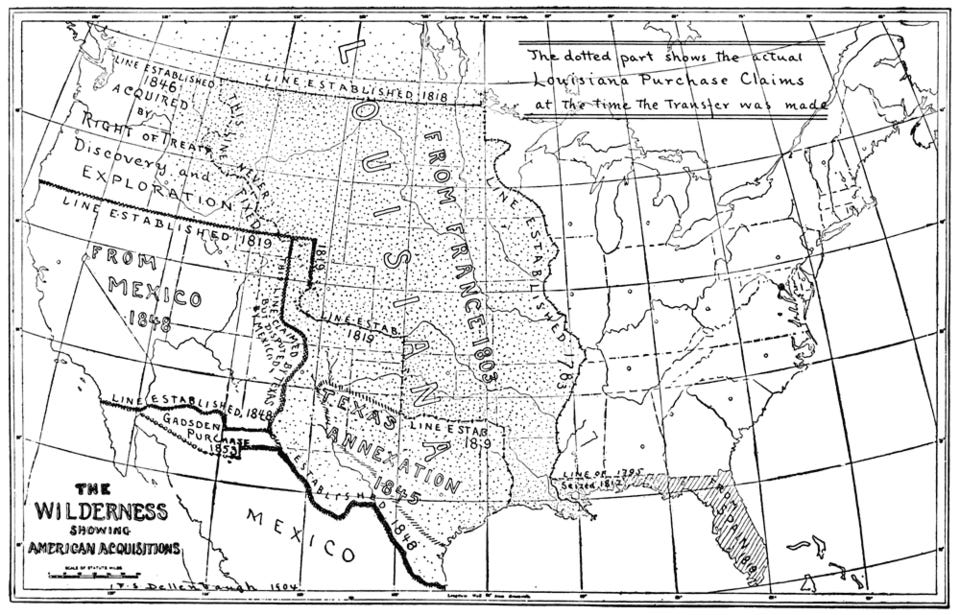
Epidemic had destroyed the expeditionary forces, and Napoleon abandoned his imperial project in the Caribbean and North America. Without the profitable sugar colony on Saint-Domingue the establishment of the Louisiana empire made much less sense strategically since it was originally going to function as food and lumbar supply for the Caribbean colonies. There was also the fact that Napoleon faced a likely war with Britain and would need vast cash reserves for the European campaigns, as he had spent somewhere around 2 million francs on his failed expedition to suppress the Saint-Domingue rebellion (which Google’s AI tells me would have the purchasing power of somewhere around $100-145 million today, take that with a grain of salt), and the fact that France lacked the naval power to defend their distant territories in North America. In 1803 Napoleon sold Louisiana to the United States for $15 million to fund those European campaigns, functionally doubling the size of the United States territory and shifting the balance of power in North America.
Mosquitos as Geopolitical Agents
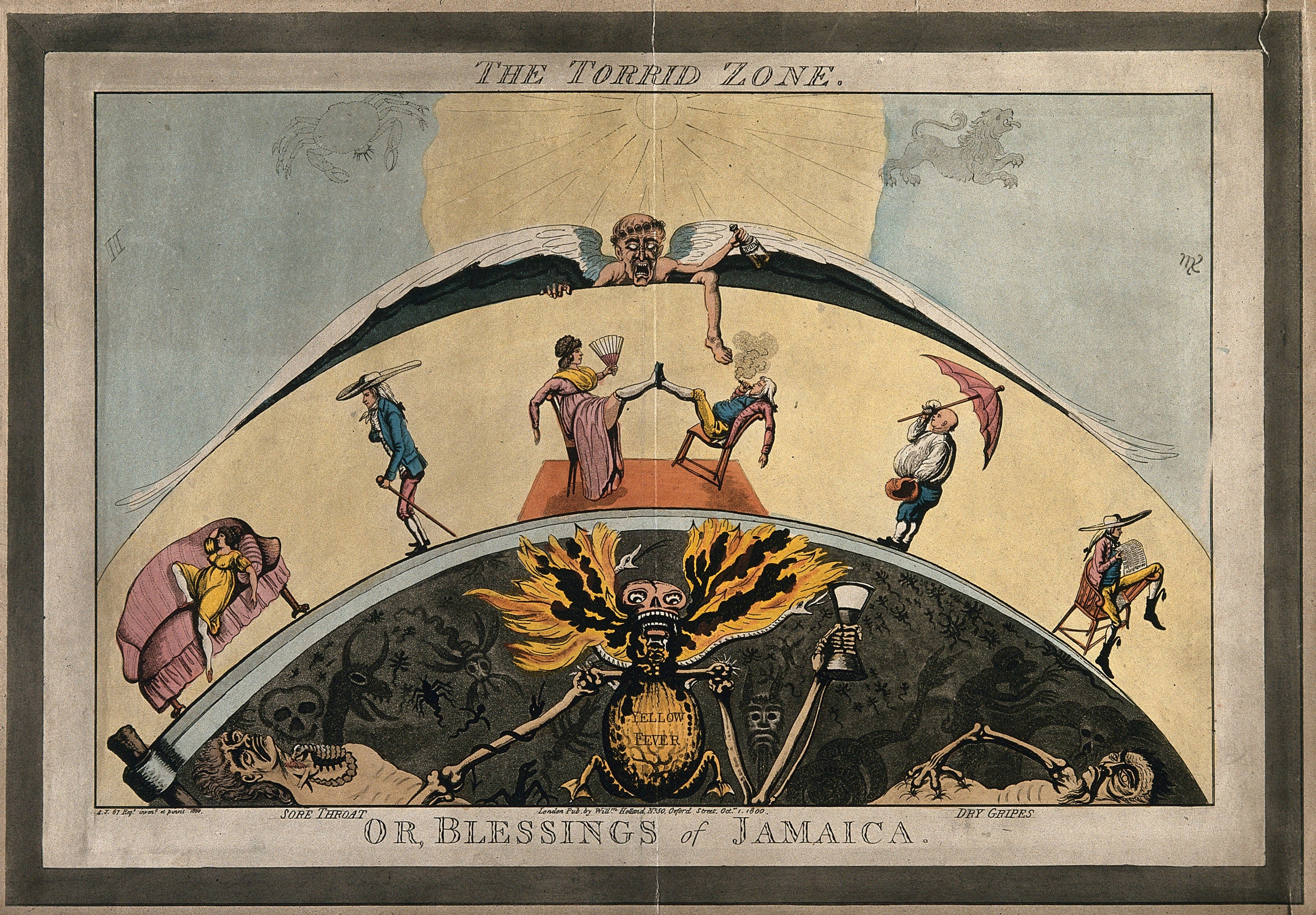
J.R. McNeill’s book Mosquito Empires characterizes yellow fever and malaria as “partisan” diseases in how they functioned in the Greater Caribbean world, where they preferentially attacked newcomers and favored the resident populations over any new invading force. That amplified that Haitian revolution’s capacity to fight against the French and British military forces who were also fighting the invisible enemies that are mosquito-borne illnesses. But it’s interesting to think about how these events were contingent on the choices made. Had European forces just chosen to avoid rainy-season campaigns or prioritizing the rotation of troops, or had they invested in vector control things may have had very different outcomes. In the end, Napoleon’s decision to sell Louisiana depended heavily on the Saint-Domingue disaster, but the financial needs of a looming war with Britain and Thomas Jefferson’s willingness to buy the largely unknown lands were crucial. In that sense, mosquitos served as hugely powerful but largely unacknowledged geopolitical agents who can influence human institutions through the creation of ecological and immunological inequalities.
McNeill argues that between 1655 and the late 1700s yellow fever had helped to establish and stabilize the imperial status quo by protecting Spanish America from French and British conquests despite the Spanish empire’s relative military weakness. Yellow fever (and malaria) would consistently hit the invading British and French forces when they would attempt their coastal campaigns, while the local Spanish forces who had been exposed since childhood could usually hold out until the invaders had been tackled by the invisible enemy. Ports like Cartagena and Havana were endemic with yellow fever; the invading forces of immunologically naïve European adults living in dense camps became mosquito-fodder. Britain had sent roughly 29,000 men to Cartagena in 1741 to fight the Spanish. They ended up with casualty rates up to 80% in some units with the overwhelming proportion being due to yellow fever and malaria. The ecology made it impossible for Britain or anyone else to keep up a sustained siege to secure long-term control of the area. By the time the British had technically “won” control over the area, so many tropps were dead of sick that they couldn’t protect the area. In the end, the Peace of Paris in 1763 meant Spain got Havana back and the British got Florida. Britain had taken the city but couldn’t handle the underlying disease ecology of the area.
The struggle in Saint-Domingue shows how the boundaries of nations can be redrawn by the ecological realities that determine who can survive in a given environment. Yellow fever and malaria acted as invisible mapmakers by hollowing out French military strength and crippling Napoleon’s ambitions, showing that an empire built on European manpower could not take root in a disease environment where Europeans were immunological outsiders. The collapse of the French expedition caused an imperial retreat so dramatic that it transformed the political geography of North America. France’s failure to reestablish control in the Caribbean made Louisiana strategically useless in the eyes of Napoleon and therefore financially indefensible. This then set the stage for the Louisiana Purchase and the dramatic westward expansion of the United States. In this way, mosquito vectors indirectly shifted borders thousands of miles away from their original breeding grounds, and altered the territorial balance of power on an entire continent. The same ecological forces had long protected Spanish America from British and French conquest, showed that disease environments can create durable, biologically enforced borders where military might repeatedly failed.
Seen through this lens, the cartographic revolutions of the eighteenth and early nineteenth centuries were products of the environmental constraints imposed by mosquitos. They way they shaped who could invade, who could endure, and who could rule show us how borders are often grounded as much in the biology of place as in the aspirations of empires who desire to conquer them. The geopolitical map of the Americas was vectored into being as much as it was built through conquest.
The Edge of Epidemiology is a reader-supported publication. To receive new posts and support my work, consider becoming a free or paid subscriber.