Before 1492, the indigenous people of the Americas lived in a long-term isolation from the vast reservoir that was Eurasia’s disease pool. Due to being more dispersed and less commonly packed densely into large urban centers, they largely avoided the crowd-amplified diseases of the Old World like smallpox and measles. They also herded fewer domesticated animals which limited the transmission of many highly contagious infections. That said, a variety of infectious diseases were endemic (continually present in the area) and there was the occasional epidemic outbreak in pre-Columbian societies. Paleopathology, ancient DNA, and indigenous oral/early colonial accounts reveal just what was going on in the ecological landscape of infectious disease in the Americas.
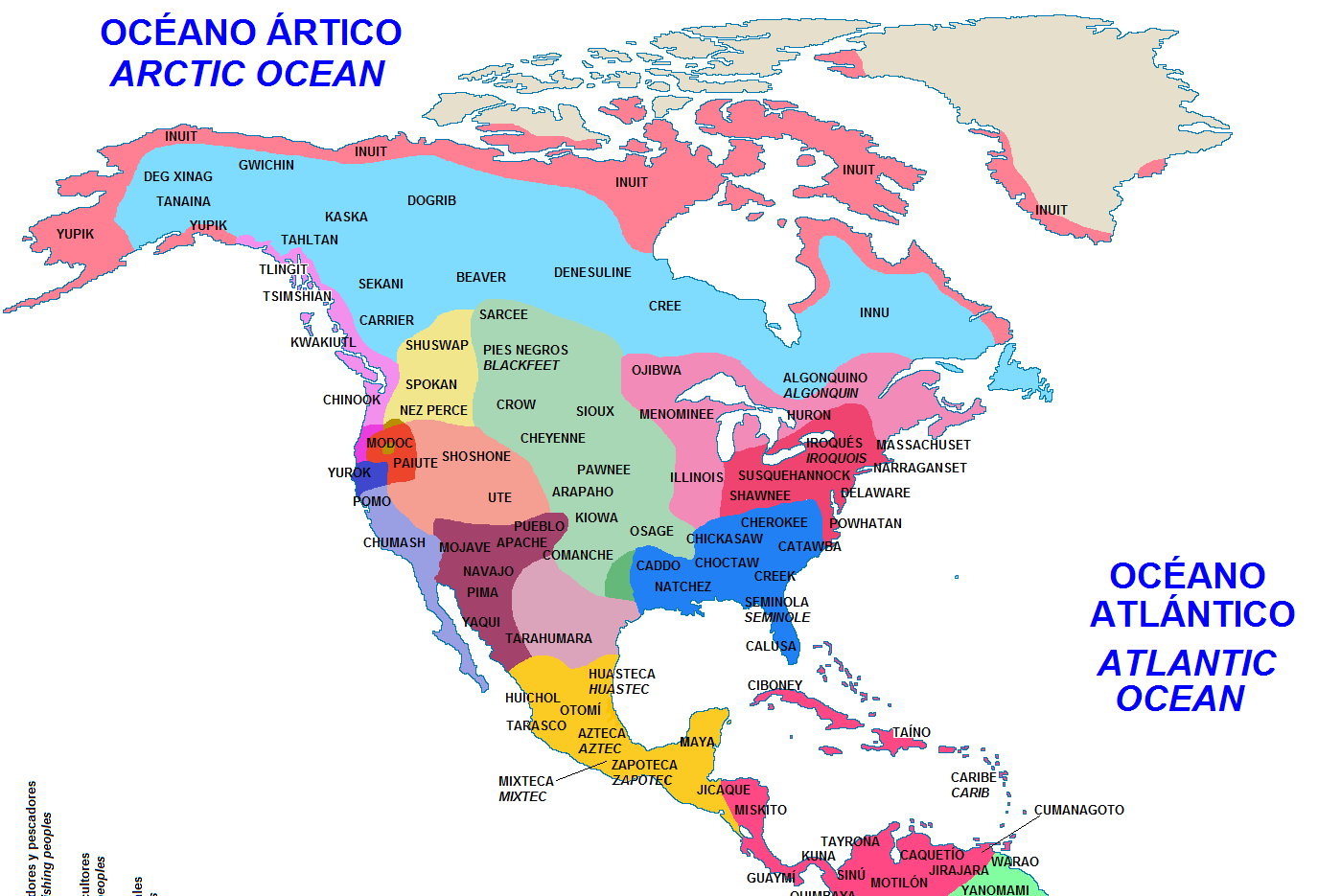
In this piece, I’m going to walk through just what infectious diseases were stalking the inhabitants of the Americas before any Old-World diseases were brought over. This isn’t meant to be an exhaustive list, as that endeavor would fill multiple books, but we’ll go over many of the key cultural-geographic regions of the Americas and the diseases they were exposed to. Think of it as a traveler’s guide of maladies one might encounter in a trip from Beringia down across North America and down through Mexico, Central America, all the way down to Tierra del Fuego. This will be part 1, covering the major infections of North and Central America.
Arctic and Subarctic North America
In the frigid expanses that make up modern day Alaska and Canada, hunter-gatherer density was rather low. That combination of freezing cold and small groups tended to constrain the spread of many infectious diseases. This meant large-scale epidemics were unlikely to have happened before contact. However, Arctic groups were afflicted with zoonotic infections and parasites linked to their diet and environment.
Helminth parasites were a rather frequent issue in the Arctic due to their diets being high in raw or undercooked meats which led to parasitic infections. These included trichinellosis (obtained from eating infected meat of carnivorous predators), fish tapeworm (from raw fish), and echinococcosis (likely from dogs and foxes). These were likely endemic in Arctic and Subarctic communities, especially those reliant on the ocean for their main food sources.
While I said the population density was rather low in the Arctic and Subarctic, diseases known for being much more crowd-dependent weren’t entirely absent from the area. Tuberculosis, while not widespread in the far north pre-contact, has been found in bioarcheological surveys done in Alaska and Canada, suggesting low-level endemic TB. This was identified through skeletal lesions that are consistent with TB and backed up by ancient DNA evidence. The Inuit and Dene populations had low-prevalence TB, with some speculating that a possible source was with Norse colonies in Greenland or Newfoundland between 1000 and 1400 CE, however direct evidence of this transmission remains, and likely will remain, elusive.
Rabies is endemic in Arctic foxes and anthrax would have been present in some caribou, so occasional transmission of these two would have been possible as well, though unproven in the archeological record (from what I could tell). That’s basically all we know was hitting the northernmost areas of the continent from an infectious disease point of view, so let’s move south a bit.
North American Coasts and Interior (The Temperate Region)
This massive region broadly includes the Eastern Woodlands, Great Plains, Pacific Northwest, California, and the Southwest deserts. Coastal societies and interior farming groups would have been exposed to different endemic infections, although a couple were widespread across the continent.
The treponemal diseases of yaws and bejel (possibly syphilis as well) were seen across North America. For a quick story on how syphilis likely made it over to Europe, check out my previous post. Pre-contact skeletal remains from both coastal and inland sites show the signature changes of syphilitic relatives. Burials in Chaco Canyon, New Mexico from around 1100 AD showed bone related changes indicative of treponemal infections. We also see the telltale pitted skulls and shin lesions seen in syphilis or yaws in many Eastern Woodlands skeletons from the Mississippian culture and even older. Treponemes were likely incredibly widespread in the Americas with recent ancient DNA studies confirming a deep history in the area and supporting an American origin for modern syphilis.
Tuberculosis was also found in temperate regions of North America as well. As I mentioned, this disease tends to thrive in dense urban settings, which weren’t exactly common in North America. The thought is that it may have spread north via trade networks from Mesoamerica/South America. This is backed up by a 2022 study that recovered TB genomes from inland human remains in the U.S southwest and highland Arizona/Mexico that matched the strain of TB found in coastal Peru. This particular strain was picked up from infected seals (see Andes section next week for more on that). All of this to say that TB was likely not raging at epidemic levels. It was more likely to have quietly smoldered in certain communities with enough density for it to stick around, like the pueblo farmers of the Southwest of the mound-builders of the Mississippi Valley, the larger and more sedentary cultures of North America.
As agriculture and village life were adopted in these regions, intestinal parasites started to pop up more and more. Coprolites from prehistoric sites confirm roundworm, tapeworm, whipworm, and pinworm. One cave in Durango, northern Mexico that was inhabited around 1200 AD yielded both whip-and-pinworm eggs as well as other zoonotic parasitic remains. This variety of parasites is indicative of the inhabitants coexisting with parasites from both human fecal contamination as well as animal hosts.
Fungal infections were something to be particularly worried about in the more arid Southwest regions. The soil fungus Coccidioides causes Valley Fever, and pre-contact farmers in what is now Arizona likely contracted coccidioidomycosis by inhaling dust containing the spores of the fungus. One specific case from a Sinagua culture burial from around 1000-1400 CE found the spherules of cocci embedded within the skeleton, along with bone lesions across the body. Another example comes from a Hohokam site near Tempe, AZ from around 1150 CE with similar bone damage and disseminated cocci. Desert farming requires frequent soil disturbance, for things like digging irrigation canals. The dry dusty environment combined with agricultural activity enabled that soil-borne fungus to become an endemic hazard for the pre-contact Southwesterners.
Mesoamerica (Mexico and Central America)
This is the region where we start to find large, sedentary civilizations like the Maya and the Aztec, with their sprawling urban centers, intensive agriculture, and long-distance trade routes; all of which are conditions that tends to support continuous disease transmission. The Mesoamericans suffered both endemic maladies and at least one significant epidemic in indigenous traditions.
The settled areas of the region, with their dense populations and imperfect sanitation practices, likely fostered water- and food-borne illnesses. Chronic diarrheal diseases due to bacterial of amoebic dysentery, along with salmonella/paratyphoid fevers were likely affecting the inhabitants regularly. This would have been especially true during rainy seasons or in areas with stagnant water. The problem is those tend to leave little traces in the archeological record. More detectable infections like those from parasites were common, however. Deposits from latrines and coprolites from pre-contact Mexico contain roundworm, whipworm, and fluke eggs, indicating Mayan and central Mexican communities were host to intestinal worms.
There were also vector-borne diseases in the region, such as Chagas disease (aka American trypanosomiasis). This is caused by the blood parasite Trypanosoma cruzi and is transmitted by triatomine “kissing bugs” that would have infested adobe houses and palm thatch roofs. Later chronicles reported that around 1330 CE in the area around Lake Texcoco a mysterious epidemic with a high mortality rate. The victims were afflicted with swollen eyelids and faces and hemorrhagic diarrhea, while pregnant women often miscarried; all of these being symptoms of acute Chagas infection. It’s been proposed that the epidemic occurred during a famine when their normal food source was scarce. This forced people to new food sources, one of which might have been opossums (who happen to be reservoirs of T. cruzi leading to a foodborne transmission of the parasite.)
Just like the American Southwest and temperate North America had their respective disease ecologies, the varied environments of Mesoamerica, ranging from the tropical forests to the highland valleys, would have had different environmental factors contributing to their disease burden. In the more tropical lowlands, standing water and heat favored mosquito breeding. This might bring to mind diseases like malaria or dengue, but evidence suggests that Plasmodium (malaria) was either absent or extremely rare before the European/African introductions. That’s not to say there weren’t other arboviruses lurking around. While not identified in the archeological record, flaviviruses or alphaviruses causing an occasional case of fever in the Maya communities would not be shocking to hear about. Nor would fungal infections, like were seen in the American Southwest, be out of place in El Norte.
By the time you reach Mesoamerica, you realize the infectious disease landscape of the pre-contact Americas was a patchwork of treponemes woven across the continent, TB smoldering where population density allowed for it, parasites hitchhiking on early agricultural practices being adopted, pockets of fungal disease in the desert Southwest, vector-borne threats like Chagas lurking in the adobe architecture of central Mexico, and onto the other mosquito-borne diseases of Central America like Oropouche fever.
We’ll stop here; please feel free to mention other diseases you know were in these areas and I will update accordingly! Like I said, this wasn’t meant to be exhaustive but I’m happy to make additions. That’s it for the brief tour of disease ecologies faced by people from Beringia to Tenochtitlan. Next time we head south over the Darien gap into the Andes, the Amazon, and the Southern Cone. Hope you enjoyed the trip.
The Edge of Epidemiology is a reader-supported publication. To receive new posts and support my work, consider becoming a free or paid subscriber.