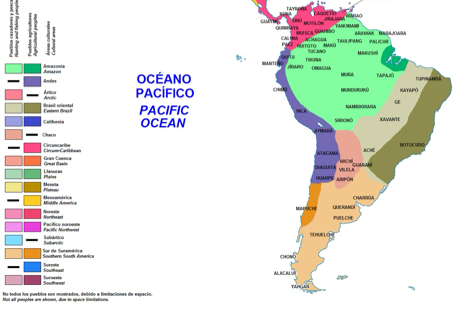
Last time we went over some of the infectious diseases that were prominent in pre-contact North America and Central America. In this second part (of two) on the pre-contact disease ecology of the regions, we’ll make our way into South America’s major cultural-geographic regions and take a look at the diseases that were present, from tuberculosis in the coastal valleys of Peru to Chagas disease lurking in the Amazonian forests. Like before, this isn’t an exhaustive catalog, but rather a guided tour through the microbial world that pre-contact populations had to contend with. Think of it as continuing our traveler’s guide, now heading south from the high Andes to the rainforests and down to the windswept plains of Patagonia.
The Edge of Epidemiology is a reader-supported publication. To receive new posts and support my work, consider becoming a free or paid subscriber.
The Andes
The Andean region making up present day Peru, Bolivia, Ecuador, and the northern highlands of Chile and Argentina were one of the places in the Americas that housed denser civilizations like the Inca and their predecessors. They also contained incredibly diverse ecologies ranging from the coastal deserts to the high mountains. Paleopathology and ancient DNA make it clear that some of the most significant New World pathogens were present in the region before any contact with the Europeans.
First, and most notable, is tuberculosis. TB was present and spreading in the Americas well before 1492, with the oldest confirmed cases coming from coastal Peru and northern Chile. This evidence was in the form of a 1000-year-old Peruvian mummy that was infected with TB DNA. Most notable is the fact that this strain was most closely related to a strain found in seals and sea lions. This is highly suggestive of TB first having entered the Andes via a zoonotic transmission event coming from one of those marine mammal species. The proposed chain of events goes something like humans in Africa gave TB to a seal species within the past 2500 years, which was then carried across the ocean to those in South America. Once the disease had been established among coastal fishing villages, it would have spread into the interior via trade routes. By the later pre-contact era, TB was endemic in parts of the Andes, particularly the crowded coastal valleys and highland towns with close quarters living arrangements. The disease was likely more chronic, causing prolonged periods of illness (thus the skeletal lesions), but it still would have been a large driver of morbidity and mortality in the pre-contact populations.
Another notable disease of the Andes and the adjacent more arid regions is Chagas disease (aka American trypanosomiasis). Caused by the parasite Trypanosoma cruzi, the parasite is found in wild rodents and in kissing bugs. Its life cycle was likely established in the region long before humans had come to the area, upon which time they ended up part of that transmission cycle. There is evidence for ancient chagas in ancient DNA in 4000-year-old human mummies from the coastal region. In northern Chile’s dry coastal region, Chagas was likely endemic within the Chinchorro culture, with over 40% of the mummies having shown signs of infection. The early groups of fisher-folk were less crowded than groups like the Inca, but were apparently heavily exposed to the infectious kissing bugs. Clinically, chronic Chagas would likely have caused things like heart failure or digestive tract issues, with some Andean mummies showing massively enlarged colons which is consistent with the gastrointestinal form of Chagas. Some environmental factors need to be brought up for this specific infection. The domestication of animals like guinea pigs and llamas may have attracted kissing bugs to their dwellings, which then provided ample hiding space for the bugs.
I hadn’t heard of this next one until I was doing the research for this post. It’s called Bartonellosis, or Carrion’s Disease. The disease (caused by the bacteria bartonella bacilliformis) is transmitted by sandflies and has been in the highlands of Peru for at least a millennium. Carrion’s has two distinct phases, the first being an acute fever and severe anemia. This is followed by a chronic phase with eruptive skin lesions. A pre-contact mummy from around 900 to 1000 CE showed that the young man was covered with wart-like skin lesions and bone damage, with histological analysis confirming its presence by the clumps of tiny, rod-shaped bacteria. The infection is currently endemic in the Andean valleys, where the sandfly vector thrives in the warm river valleys. The mummified case is thought to have arisen from such an environment, with it suggesting epidemic outbreaks occurring periodically.
Another sandfly-borne disease with a foothold in the pre-contact Andes is Leishmaniasis, particularly the cutaneous (skin-related) and mucocutaneous (mucous-membrane related) forms. We see evidence for it in the area in the form of paleopathological and ancient DNA studies. One example comes from a mummified 6-year-old from Cuzco, Peru. Researchers observed infected macrophages in the tissue, a sign of Leishmania parasites, which also cause skin ulcers. Further evidence came from four human skulls from the Atacama region that had destructive lesions in the noose and face that are consistent with the mucocutaneous form, with DNA amplification confirming the diagnosis. The disease was likely most prevalent in the oasis and valley populations of the desert coastal regions and the eastern Andean slopes, as that’s where the sandflies would have found the most hospitable climate in the warm, semi-arid valleys.
The people of the Andes, especially coastal communities, also likely had high intestinal parasite burdens. Hookworm, whipworm, and roundworm infections have all been found in pre-contact South America. Hookworm is a particular mystery (one that I covered here), given hookworm would have been unlikely to survive an Arctic migration, suggesting some alternate introduction at some point. Once it was present, the use of human feces as fertilizers and barefoot existence on warm coastal soil would have easily maintained transmission. The presence of these types of intestinal parasites are indicative of farming and irrigation techniques (which expose people to fecal contamination) and the likely presence of domesticated animals which help to spread the zoonotic worms.
Before 1492, the Andes had an incredibly rich and challenging disease ecology. Like everywhere else, pathogens found their niches in the environment and produced a mixture of chronic endemic diseases and the occasional deadly outbreak. A couple of these were also present in our next stop, the Amazon Basin.
The Amazon Basin
Encompassing the rainforests and rivers of Brazil, Peru, Colombia, and their neighboring countries, the Amazon Basin was a different epidemiological environment, despite the crossover of a couple of the Andean diseases. This region is incredibly high in biodiversity. It’s warm, humid climate also meant an abundance of possible vectors and reservoirs for infectious diseases to hide in. However, due to the pre-contact Amazonian people generally having lived in smaller, semi-nomadic villages and dispersed communities, many diseases in the region were zoonotic or vector-borne, as well as endemic. This means we don’t have much evidence for large-scale epidemics. Instead we’re left with the infections that likely caused a persistent health burden in the area.
First, a few that we already went over. Chagas disease is endemic to the area, with dozens of mammal species playing host to the parasite and with kissing bugs thriving in the mud-based walls, palm thatched roofs, and within animal burrows. The disease was found in a PCR-test run on a more than 4000-year-old female skeleton found in a rock shelter on the edge of the Amazon in Brazil. The specific strain was one that is widespread among mammalian species throughout the Amazon region and still infects humans there to this day. Leishmaniasis also called the Amazon Basin its home. Rainforest sandflies transmit the disease here, with early explorers noting the ulcerative skin lesions. Known as “espundia” the mucosal form was documented in rainforest villagers with the ancient presence supported by the findings in the Andes. There were also the same intestinal parasites (hookworm, roundworm, other helminths). One different type they likely had would’ve been food-borne trematodes, a type of fluke, from fish or snails found in rivers. This is assumed due to modern Amazonian’s often having liver and lung flukes.
The unparalleled biodiversity of the region means countless microorganisms, though it is likely most of them rarely crossed into humans. Still, there were likely some more zoonotic diseases impacting the pre-contact peoples. Bites or scratches from forest animals could have transmitted rabies, with vampire bat-transmission likely having been an ancient threat. Certain arboviruses coming from arthropods probably were circulating at low levels. Venezuelan equine encephalitis virus, a type of alphavirus, is known for having a life-cycle in the Amazon and might’ve sporadically infected humans. Hantaviruses in the jungle or arenaviruses in Bolivia were likely causing hemorrhagic fever, though we lack evidence to definitively say so.
Epidemics here were likely to be rare, especially given the smaller, more dispersed populations. But the endemic diseases here were nothing to scoff at. They’d have been pervasive and endemic in some cases, with nearly everyone having some parasites, some having been infected with Chagas or leishmaniasis leading to chronic ulcers or heart disease, and possibly some fevers reminiscent of Malaria. Heavy rainfall, dense vegetation, and high levels of disease-carrying insects and their reservoirs ensured a constant low-level exposure, even without the livestock-associated diseases brought over.
The Southern Cone
The “Southern Cone” typically refers to the most southern regions of South America, encompassing present day Argentina, Chile, Uruguay, and parts of Paraguay and southern Brazil. Pre-contact groups here ranged from more agricultural groups in the north to the nomadic hunter-gatherers in the far south of Patagonia and Tierra del Fuego. Thus, the disease ecology varied pretty widely from the semi-tropical regions to the cold, temperate southern tip. Again, we see some diseases we’ve already covered making themselves known in this region as well.
Treponemal diseases, which were covered more heavily in Part 1, were known to exist in the area. Ancient DNA confirmed these in the area, with the strains being most closely related to bejel, which today occurs in arid regions of the Old World. That suggests a treponemal disease that adapted to dry environments was present in South America’s past, even in areas that are now fully tropical. These are the diseases that are most closely related to syphilis as well (see my post on how syphilis likely got to Europe here). Tuberculosis was also present in the area, along with Chagas. It should be pretty clear by now that these diseases all likely had pretty wide ranges in the Americas, with some having solid footprints in both continents.
Extensive rodent-borne hantavirus ecology has been documented across Argentina, Chile, Paraguay, and Uruguay. At least thirteen hantavirus genotypes have been identified, each primarily associated with various rodent hosts spanning diverse habitats from forests to peridomestic areas. Notably, Andes virus is endemic to Chilean and Argentine temperate and Patagonian forests and represents the only hantavirus known to transmit person-to-person, with pulmonary syndrome cases recorded since the mid-1970s. It should also be noted that human exposure tends to be higher in disturbed or anthropogenic habitats such as agricultural lands, forest edges, and roadside areas where these rodents thrive, increasing spillover risk. Climatic and seasonal shifts also influence rodent densities and infection prevalence, suggesting that environmental change may modulate public health risk. Indigenous communities frequently exposed to rodents show notably high seroprevalence, reflecting close contact patterns
When Europeans arrived in South America, the societies they encountered were already shaped by tuberculosis, Chagas disease, treponemal infections, leishmaniasis, bartonellosis, intestinal parasites, and a wide array of vector-borne and zoonotic threats. These were mature disease ecologies, reflecting local environments, housing styles, subsistence practices, animal relationships, and population structure. But once Europeans arrived, that ecological balance was shattered. The diseases that followed did not simply add to this landscape; they overwhelmed it. That’s where we’re going next; to the arrival of smallpox, measles, influenza, typhus, and other Old World pathogens, and to the most devastating epidemiological collision in history.
The Edge of Epidemiology is a reader-supported publication. To receive new posts and support my work, consider becoming a free or paid subscriber.