I’m currently researching for a piece on the disease ecology of the early Americas. It was a rich microbial environment, like just about everywhere else in pre-history was. But during my reading I came across a genuine unsolved mystery of the ancient American disease landscape. Not the Cocoliztli epidemics, and what I think might’ve been the vector at hand, that one is for another time. Today I’ll be guiding you through the mystery that is hookworm in ancient South America and why the question of “how did hookworm get to the Americas?” is one of the most thorny in paleopathology.
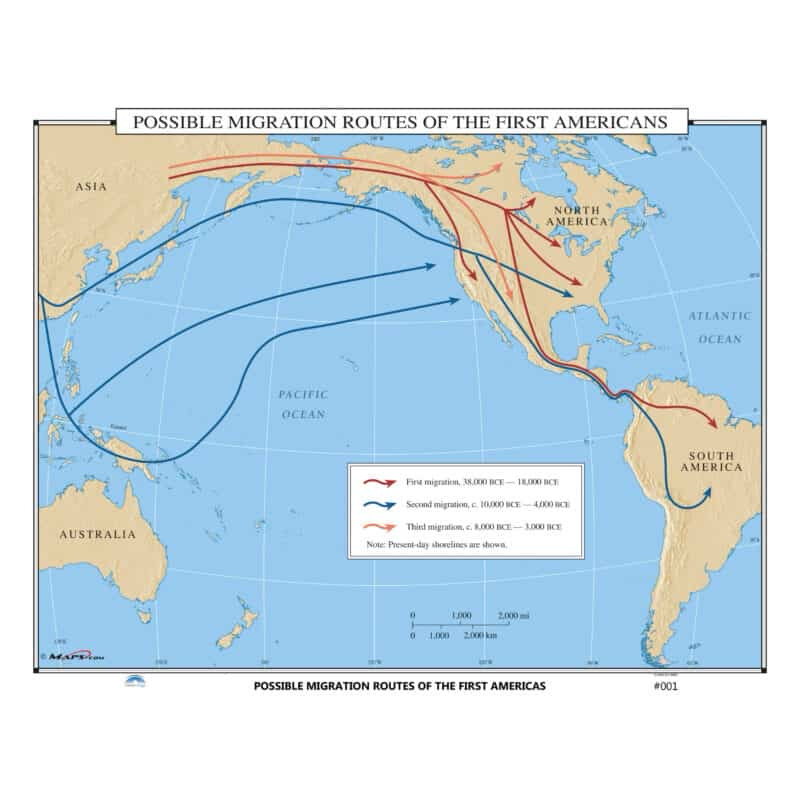
The story starts in Northeastern Brazil, where paleoparasitologists in an early Holocene rock shelter were analyzing human coprolites where they found the unmistakable hookworm eggs from the Ancylostoma family. The location wasn’t surprising on its face. These hookworms love a warm, damp environment with moist soil. Brazil was perfect. They also happen to die in cold weather and can’t survive their in the soil. But these samples from a dank Brazilian cave were over seven-thousand years old. How could these have gotten there when the only confirmed migration routes into the Americas passed through some incredibly cold areas? That’s the question I started asking myself which sent me down the rabbit hole and turned into a standalone thought-process type of post on the most mysterious disease of the early Americas. Let’s try to figure out how a parasite that can’t survive cold areas appears thousands of miles south of the only known entry point into the continent.
Hookworm Biology
To get at why this is such a mystery we have to get into some hookworm biology and some of the questions I asked along the way while looking into this. The species Necator americanus is, contradictorily, an Old World hookworm that is not native to the Americas. These require warmth and constant human-soil-human transmission cycles which would have been nearly impossible to keep up along a journey through Beringia or along the sub-arctic corridor. I say nearly impossible because their lifespan of 1 to 3 years in a human-host leaves open a possibility there, but only a slight one.
Those coprolites from Brazil are still the oldest known hookworm remains in the Americas. Not North America or even Central America. We also see examples in mummies found in the Andes mountains that confirm a somewhat widespread presence in the southern latitudes. North American sites with hookworm appear much later in the American Southwest. If hookworm had arrived from the north, we should expect that order to be reversed.
Thinking it Through
This is where I stopped reading for a bit and started thinking about every single transmission method I learned in my infectious diseases courses, even the ones that are incredibly unlikely for a hookworm. Could it have been some sort of animal reservoir? Nope, it being an Old World hookworm eliminates the possibility that this arose from some hookworm in a New World primate or some extinct species like the giant ground sloth. A local evolution is also ruled out as the genetics don’t seem to support a New World origin, as the modern N. americanus is highly homogenous globally making it difficult to make an evolutionary clade for. Contaminated water or soil would require an infected human stepping foot there first. These things don’t spontaneously arise. And a later European or African introduction during the Age of Exploration is ruled out by the age of the samples.
Then I remembered the papers on Papuan genetic signatures popping up in Brazil so I went into those papers, having forgotten that genetic similarity was due to them both arising from a “Population Y” that contributed to both. So it wasn’t the Papuans bringing it over at some unknown point. But the parasite had to arrive with humans, and if I was Graham Hancock I’d be shouting “my ancient population likely had hookworms and brought them!” Thankfully I’m much more ok with something being a mystery than the likes of him, but I’m also willing to speculate a bit.
The Possibilities
Like I said 1 to 3 year lifespan gives migrating groups quite the narrow buffer, but it would have been possible for some individuals to carry hookworm across warmer areas in the summer during an ocean passage. This makes some parts of the coastal route biologically plausible. Coastal California, down through modern day Mexico, Central America, and down the South American coast would not be an issue at all. But the northern Pacific rim around Northern Japan, Russia, Alaska, British Columbia, Washington, and Oregon were likely too cold and hookworm would have probably died out before reaching a warm enough stopover. This would have only been possible if they made it to a warm point within 1 to 3 years of the larvae reaching adulthood, which is definitely not out of the picture in my mind.
So, we’re left with a couple of defensible mechanisms that I can come up with, you’re welcome to suggest more in the comments! The first would be a slightly warmer route that’s now under water, island hopping along the coast. The early pacific sites older than eight thousand years before present are now well below sea level. The northern level I said would have been difficult for hookworm survival may have been just habitable enough for transmission. Without this theory being fully falsified, we’ll likely never know since shoreline settlements aren’t the best for preserving coprolites. But even that possibility is only slightly more likely than the scenario described above.
The other possibility is some small founder group that carried hookworm having arrived by sea either from Southeast Asia or Africa. There is no evidence for this beyond the existence of hookworm in South America, but a short period of contact would have likely left negligible detectable archeological or genetic imprints. That combined with population turnover through the ages and the later admixture from European and African groups makes this hypothesis difficult to find evidence for.
The Open Mystery Remains
At the end of all this, we’re left with the story of a parasite that absolutely should not be where it is, when it is. The earliest hookworm in the Americas shows up abruptly in the warm tropics of the South, with no sign of it in the northern or central regions where it ought to appear first if it came through the only confirmed migration routes. The biology says cold should have killed it while the archaeology says people moved through cold anyway and the parasite record shrugs and points to Brazil as the first spot it arrived.
This doesn’t mean lost civilizations or forbidden migrations. It doesn’t even require anything out of the norm to those who study human migration patterns, just the acknowledgment that early coastal peoples traveled in ways we still can’t fully map, and that sea-level rise probably buried much of their trail beneath a continental shelf they once walked and island hopped along. For now, hookworm simply marks a point on the ancient landscape where our knowledge drops off sharply.
Parasites tend to survive only in the margins of the archaeological record anyways but when they do show up, they leave very little room for misinterpretation. That’s what makes this such a compelling case to: hookworm isn’t ambiguous. It’s either there or it isn’t, and where it appears in the early Americas doesn’t quite match our current story of how people got there.
So the mystery remains, for me as a reminder that ancient disease ecology is full of loose ends, and that even a tiny intestinal worm can pry open big questions about human movement and the worlds our ancestors walked through. If this puzzle teaches anything, it’s that the early Americas still have more surprises buried in them, waiting for the right cave, the right coprolite, or the right bit of soil to bring them to light.
The Edge of Epidemiology is a reader-supported publication. To receive new posts and support my work, consider becoming a free or paid subscriber.