America isn’t cursed. The air isn’t secretly shaving months off our lives, the water isn’t a nationwide slow poison, and our genes didn’t unionize for early retirement. We die younger than our peers mostly because of how we live, and, very specifically, how we die. Overdoses, car crashes, and gunfire shave years off our national average. The forces at work are loud, stupid, preventable, and, frankly, embarrassing.
That “last among rich nations” line, while true, simplifies a more complex picture. U.S. life expectancy sits around 78.4 years and peers land near 82.5 on average. We’ll call it a four-year gap. Four years sounds pretty bad. But that gap feels more closable when you realize it’s concentrated in a handful of premature deaths and not some universal shortening of old age.
Our premature death rate (for those <70 years old) is roughly double that of comparable nations (408 per 100k people vs 228 per 100k people) with roughly a third of that difference being down to preventable health issues like cardiovascular diseases, kidney diseases, and chronic respiratory issues.
Eighty-year-olds in the U.S. live about as long as eighty-year-olds in Europe or Japan. Between 80 and 100 we Americans may even have the edge. The cliff is earlier. On “potential years of life lost,” we hemorrhage about 4,721 per 100,000 people, versus 2,723 in comparable OECD countries. And while much is said about the US and its insurance issues, this comes down to being a behavioral metric more than anything.
Let’s say the quiet part out loud.
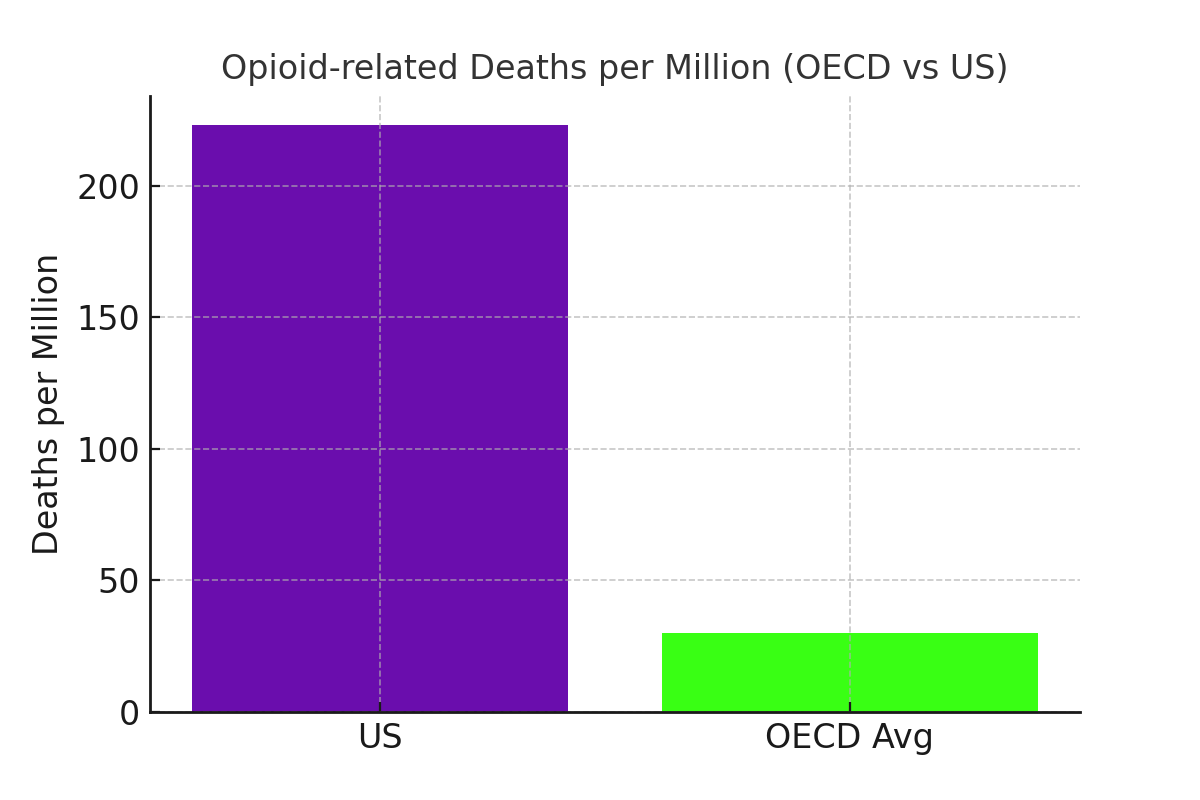
Drugs are a huge problem: More than 100,000 overdose deaths in 2023. Our opioid mortality is ~223 per million, versus an OECD average near 30. This amounts to roughly 12% of the difference between the US and comparable nations.
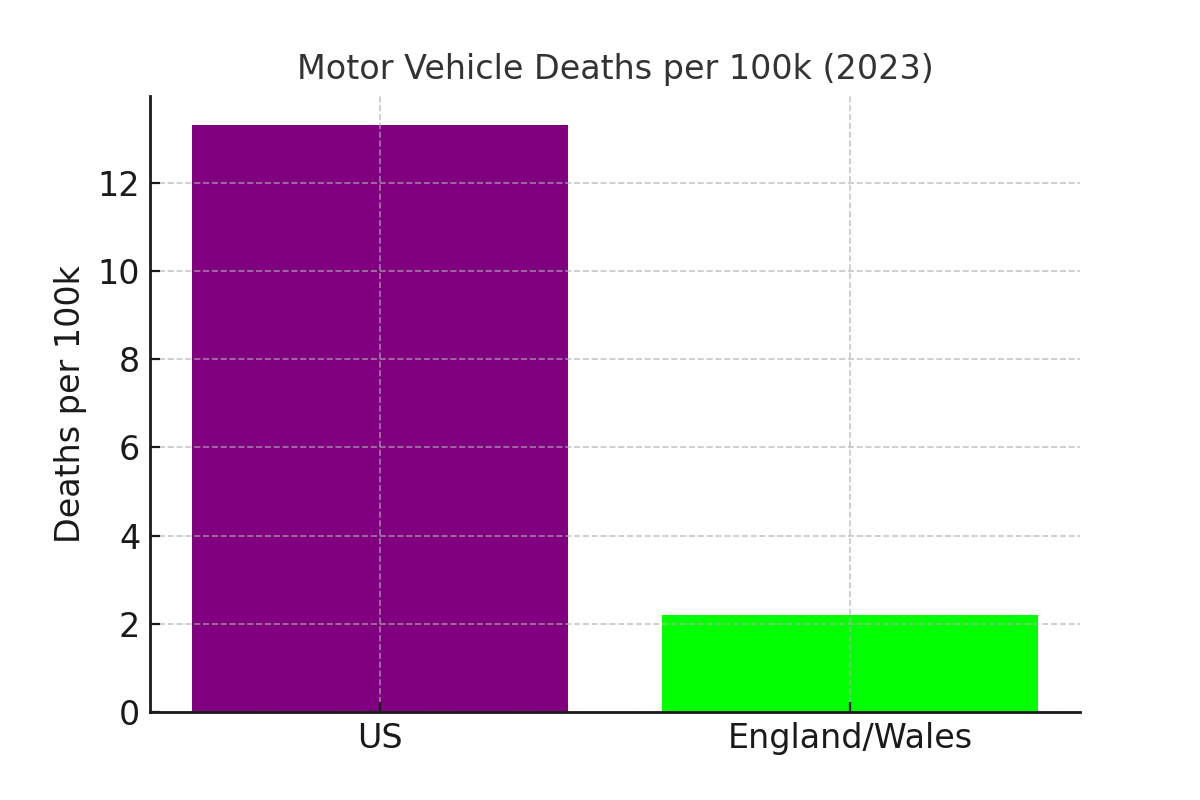
Car deaths are way too high: Road deaths ~13.3 per 100,000 here versus 2.2 in England and Wales. This accounts for roughly another 17% of the gap to other nations.
Guns (plus alcohol and drugs): Together they account for roughly 1.6 years of the gap by themselves. That’s another 20% of the gap right there just for gun related deaths (both homicide and suicide).
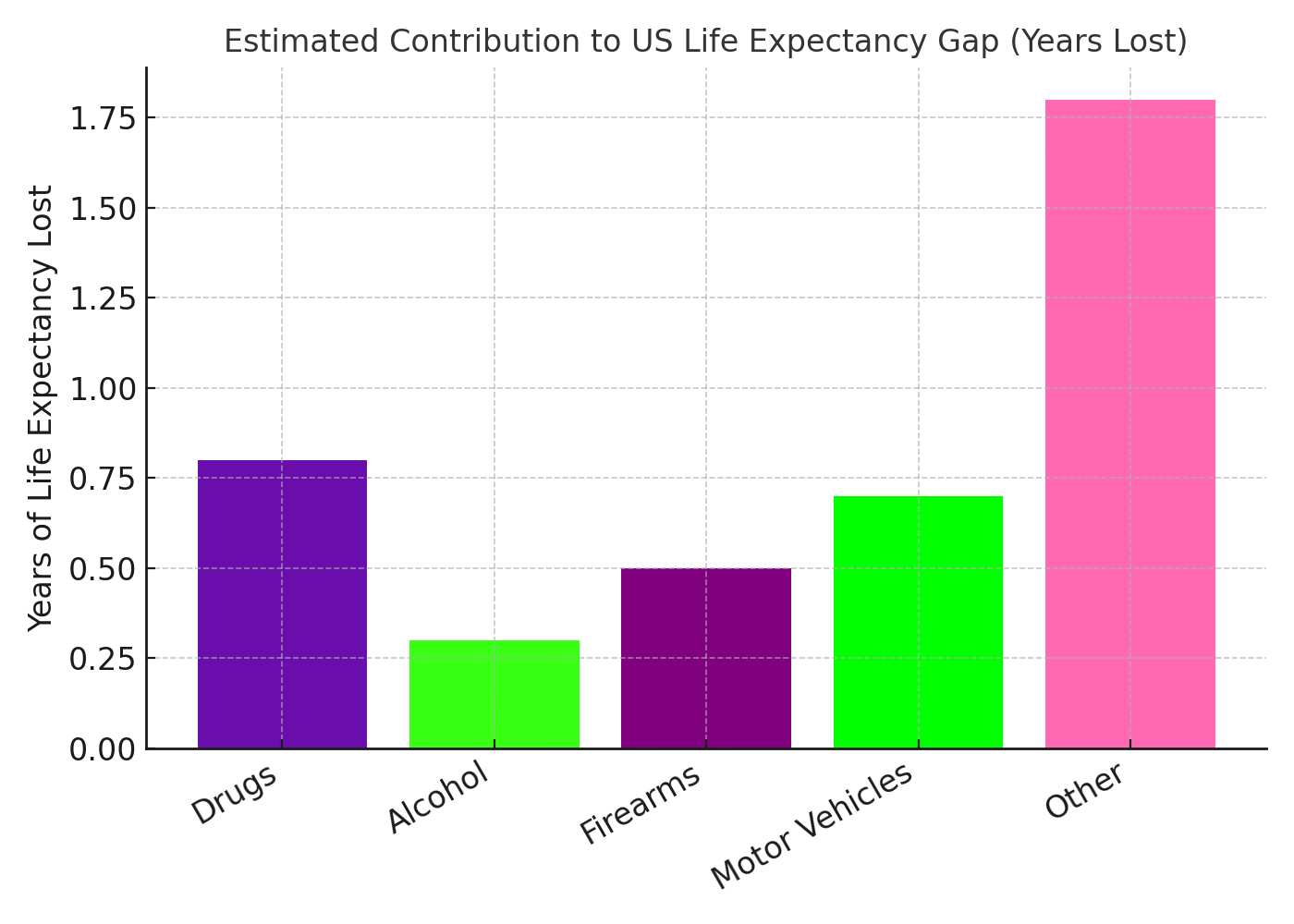
That’s the rogues gallery we’re working with. Not “processed bread.” Not “seed oils.” Not “food dyes.” It’s pills and powder, steel and asphalt, brass and lead.
The Edge of Epidemiology is a reader-supported publication. To receive new posts and support my work, consider becoming a free or paid subscriber.
Here’s the unsexy miracle: because so damn much of the gap is self-inflicted, it’s also self-reversible. All it would take is people actually crossing items off the to-do list.
Start with overdoses. This is the rare crisis where the antidote fits in a pocket and works in seconds. Naloxone everywhere: libraries, buses, gyms, concert halls, event centers. Promote fentanyl test strips and stop pretending that information is the problem. Build low-barrier medication programs where “treatment” doesn’t require an endless amount of paperwork and red tape.
Cars next. Since we can’t expect every car to have the safety of a Waymo in the near future (which would damn near eliminate this part of the gap) it’s time we do things to the driving environment that make it safer for everyone. Make arterial roads less like runways by adding center medians, protected turns, fewer slip lanes, and saner lighting laws instead of being blinded by the chick in the lifted truck behind you. Standardize automatic emergency braking and lane-keeping tech as non-luxury features for new cars. Ticket phone usage and speeding like we mean it for ninety days and watch fatalities fall. Lets build incredible transit, move the speed, road, and vehicle dials and take our easy win.
Guns are the loudest argument for boring policy. It might be safe to say that the average, non-hunter probably shouldn’t own a gun that takes up a primary weapon slot in a Call of Duty game, but that’s not quite palatable for a good percent of the country. We should increase background checks and training for those who pass, though. Safe storage practices would also keep curious or struggling hands from turning a bad moment into a coroner’s report.
While America is full of those who would flinch at these changes in the name of freedom or anger, we’ve made changes on this level before. Seatbelts went from being seen as “government tyranny” to “everybody clicks” in a generation. Same goes for car seats for children. Cigarette taxes bent mortality curves. Between 2000 and 2013, rich countries cut road deaths by 56%; we managed 31%. That delta comes down to what other countries tried that we didn’t do, or didn’t try hard enough at.
Here’s the hopeful (and slightly rude) thesis: Americans are not dying young because we are uniquely fragile. We are dying young because we keep selecting into risky behaviors, individually and collectively, and then acting surprised when the bill comes. We laugh in the face of the pale horse and act shocked when it comes early. That sounds grim, but it’s actually great news. You can policy your way out of texting-while-driving.
“But what about our shitty healthcare system?!”
Sure, the U.S. buys the Cadillac plan and then drives it into a wall. Excess spending doesn’t immunize you against fentanyl, texting on a mountain road, or have a handgun in the nightstand for a child to find. Healthcare can only harvest the gains our policy sows. If the population keeps generating massive volumes of high-velocity trauma and overdose, even great hospitals become janitors as opposed to our saviors.
Zoom out for a second. The gap is practically labeled with masking tape. Our overdose rate is almost eight times peers. Our roads kill at rates peers would consider a scandal. Our firearms death rate is an outlier among wealthy nations. It’s like our country is a giant OSHA violation.
Want a few numbers you can parrot? Life expectancy gap ~4 years. Overdoses: 100k. Opioids: 223 vs 30 per million. Roads: 13.3 vs 2.2 per 100k. Alcohol, drugs, firearms: ~1.6 years of the gap. The point here is to show that these three categories explain a big chunk of the pain, and each has an off-the-shelf fix.
And yes, distributional variance lives inside all of this. Overdoses don’t distribute themselves fairly. Neither do dangerous streets or community violence. If you want to reduce the gap fastest, you go where the potential years of life lost is bleeding out the most: the highway corridors, the county with the cluster of Xylazine or fentanyl-adulterated supply, the neighborhood where a beef from Instagram Live escalates by midnight.
Imagine a 24-month sprint with only deployment being what matters. Naloxone saturation to retail ubiquity. “Treatment on Tuesday” pilots in every county over a certain threshold of overdoses. A national three-month phone-while-driving crackdown with fines that actually sting and tech that tattles. A federal nudge that makes AEB and lane-keeping as mandatory as seatbelts were in 1990. Seed hospital-based violence interventions from the cities that have done it best. None of this requires a Manhattan Project. It requires a calendar.
If you do that, life expectancy doesn’t float up by magic. It climbs because the early funerals stop coming. The average age of death inches upward not because the old are immortal, but because more young people make it to ordinary oldness. That’s the unromantic arithmetic of public health.
The doom narrative is addictive because it feels profound. “We are broken” is a satisfying sentence. It’s also lazy. The truth is less cinematic and more actionable: the U.S. is clumsy as opposed to cursed. Our gap is concentrated in younger deaths which makes our fixes boring, but far from impossible since we are the architects of our shortened lives. That also makes us the contractors on the repair crew. The difference between last place and respectable comes down to whether we stop treating 100,000 overdoses and casual gunfire as the cost of doing business. We made this gap. We can close it.
The Edge of Epidemiology is a reader-supported publication. To receive new posts and support my work, consider becoming a free or paid subscriber.